

Roger Gracie: The GOAT Who Made Simple Jiu-Jitsu Almost Impossible to Stop
Updated: Sep 9
Roger Gracie: The GOAT Who Made Simple Jiu-Jitsu Almost Impossible to Stop
There have been more spectacular Brazilian Jiu-Jitsu competitors than Roger Gracie. There have been athletes with more elaborate guards, more explosive takedowns and considerably more complicated games. Modern BJJ is full of competitors whose techniques would have looked almost unrecognisable twenty years ago, and every generation seems to add another layer of complexity to the sport.
Yet if you asked experienced practitioners to nominate the greatest Brazilian Jiu-Jitsu competitor of all time, Roger Gracie would almost certainly be one of the first names mentioned. For many, there isn't really much of a debate.
What makes Roger particularly fascinating is that his reputation wasn't built upon technical novelty. Quite the opposite. Much of what he did looked like the sort of Jiu-Jitsu taught in a fundamentals class: closed guard, basic sweeps, pressure passing, mount, back control and relatively straightforward chokes. His opponents usually knew exactly what he wanted to do. They had often spent months preparing specifically to stop it.
And he did it anyway.
Roger became a ten-time IBJJF black-belt World Champion, won the World Championship absolute division three times, produced one of the most extraordinary performances in ADCC history, competed successfully in MMA and eventually finished his competitive grappling career by submitting Marcus "Buchecha" Almeida, the man who had effectively inherited his position as the dominant heavyweight of the next generation. He is a member of both the IBJJF and ADCC Halls of Fame and is regarded by his own academy as one of the most accomplished competitors in the history of Jiu-Jitsu.
But simply listing the medals doesn't really explain Roger Gracie.
The more interesting question is this: why was everybody seemingly unable to stop techniques that everybody already understood?

Born into Jiu-Jitsu royalty
Roger Gracie Gomes was born on 26 September 1981 into arguably the most famous family in martial arts. His mother, Reila Gracie, is the daughter of Carlos Gracie, while his father, Mauricio Gomes, is himself one of the most respected figures of the older generation of Brazilian Jiu-Jitsu and received his black belt from the legendary Rolls Gracie.
That family background inevitably gave Roger opportunities most young grapplers could only dream about. His development involved figures including his uncle Carlos Gracie Jr., his uncle Rilion Gracie, his cousin Renzo Gracie and, crucially, his father. But the idea that Roger emerged as an inevitable champion simply because he was born a Gracie would badly underestimate what happened next.
Roger has spoken about not being particularly dedicated to Jiu-Jitsu during his early childhood. It was later, particularly during his teenage years, that the sport began to take hold. Time spent training with Rilion Gracie helped convince him that Jiu-Jitsu might become far more than something his family happened to do.
His competitive progress thereafter was rapid. He won major championships through the coloured belts before being awarded his black belt by Carlos Gracie Jr. He then entered what was arguably the strongest heavyweight era BJJ had yet seen, competing against athletes such as Ronaldo "Jacaré" Souza, Alexandre "Xande" Ribeiro, Márcio "Pé de Pano" Cruz and others who would themselves become legends of the sport.
There was another important element to Roger's development which distinguishes him from many members of the Gracie family: Britain became his home.
Roger moved to London while still a young man and continued developing his Jiu-Jitsu there alongside his father. Eventually the Roger Gracie Academy became one of the most significant BJJ organisations in Britain, with Roger and Mauricio Gomes establishing an academy network that helped make the Gracie name part of the UK's rapidly expanding Jiu-Jitsu scene. Today the academy continues to operate from London with affiliated schools elsewhere in Britain and internationally.
For British BJJ in particular, Roger's presence mattered enormously. This wasn't simply an occasional Brazilian superstar visiting to conduct seminars. One of the greatest grapplers who ever lived was actually teaching and training in London.
The astonishing 2005 ADCC performance
If one tournament encapsulates what made Roger Gracie special, it may be the 2005 ADCC Submission Fighting World Championship.
Roger won both his weight category and the absolute division. That alone would have been an outstanding accomplishment. What made his performance almost absurd was that he submitted all eight opponents he faced on his route to the two gold medals. His academy describes him as the only competitor to have won his division and the ADCC absolute with a 100% submission rate, while BJJ Heroes also records eight submissions from eight matches.
ADCC is not a tournament populated by people who are easy to submit. It represents the elite level of submission grappling, where competitors include world-class wrestlers, BJJ champions and athletes who are themselves exceptionally difficult to finish. Tournament strategy often becomes increasingly conservative as competitors progress towards the final because one mistake can eliminate them.
Roger apparently didn't get the memo.
The performance became part of BJJ folklore because it represented something beyond merely winning. Roger demonstrated the central promise of Jiu-Jitsu at its purest: establish positional superiority, progressively remove the opponent's options and eventually force the submission.
That philosophy would define almost his entire career.
The strange simplicity of Roger Gracie's Jiu-Jitsu
Watch enough elite BJJ and you can sometimes find yourself wondering whether you have accidentally started watching a different martial art.
Guards evolve. New systems emerge. Athletes invert underneath one another, attack complex leg entanglements and move through positions that barely existed when the previous generation learned Jiu-Jitsu.
Then watch Roger Gracie. He might establish closed guard. He might sweep. He might pass. He might mount. Then he might cross choke you. Nothing sounds particularly revolutionary.
That was the problem.
Roger became perhaps the greatest demonstration in the history of competitive BJJ that
simple does not mean easy.
The techniques might have been basic, but his application of them was exceptionally sophisticated. Every apparently straightforward position contained layers of control, timing and adjustment. His weight distribution made opponents uncomfortable. His grips progressively restricted their movement. His posture and base removed obvious counters, while his pressure forced reactions that created the next opportunity.
Rather than jumping from one technique to another, Roger's Jiu-Jitsu often resembled a process of closing doors.
An opponent might begin with ten possible ways to move. Roger reduced that to five. Then three. Then one.
Eventually there was nowhere useful left to go.
In an interview looking back over his career, Roger described his game as something that continued improving year after year. Even after becoming a world champion he regarded technical progression as essential rather than assuming he had already solved Jiu-Jitsu.
That may partly explain why his fundamentals became so formidable. They were not techniques he had learned early and then abandoned in favour of something more exciting. They were techniques he continued refining at the highest level for years.
Mount: the position everybody feared
If there is one position most closely associated with Roger Gracie, it is mount.
Roger's mount became so dominant that opponents sometimes seemed to be competing in two different matches: the first was against Roger himself; the second was an increasingly desperate effort to prevent him reaching the position everyone knew could finish the fight.
The 2009 IBJJF World Championships provided one of the clearest examples. Roger won both the super-heavyweight and absolute divisions, going six matches without defeat and submitting every opponent. Remarkably, the IBJJF records that all six submissions came from mount: four cross-collar chokes and two mounted Ezekiel chokes.
Think about what that means at elite level.
These were black belts competing at the World Championships. They knew Roger wanted mount. They knew what choke he was likely to attempt once he got there. Their coaches knew. Their training partners knew. Almost everybody watching knew.
It still happened.
There is probably no better illustration of the difference between knowing a technique and mastering it.
A white belt can learn the mechanics of a cross-collar choke from mount relatively quickly. Roger Gracie spent years turning those same mechanics into a system capable of submitting world champions.
His favourite technique is listed by BJJ Heroes, unsurprisingly, as the cross choke from mount.
For beginners, that is a useful lesson. Progress in BJJ doesn't always require accumulating more techniques. Sometimes the greatest improvement comes from understanding familiar positions more deeply.
Closed guard and the slow removal of options
Roger's closed guard offers another example.
Closed guard is one of the first positions almost everybody learns in Brazilian Jiu-Jitsu, which means it occasionally develops an undeserved reputation as something elementary. As students encounter open guards, De La Riva, butterfly guard, X-guard and countless other systems, closed guard can start to feel like something they have graduated from.
Roger demonstrated the danger of thinking that way.
His closed guard wasn't based on frantic attacks. Instead, he progressively disrupted posture, controlled grips and created angles until his opponent's defensive options became increasingly unpleasant. The threat of the choke opened opportunities elsewhere. Attempts to defend an arm created another attack. Efforts to regain posture created the possibility of a sweep.
Again, there was rarely any mystery surrounding what he wanted.
What opponents struggled with was preventing the sequence once it had begun.
This progressive quality is central to understanding Roger's game. He wasn't simply exceptionally good at individual techniques; he was brilliant at connecting fundamental positions so that defending one problem increasingly produced another.
Roger Gracie versus the greats
The strength of Roger's résumé becomes even clearer when you examine who he faced.
His generation contained some extraordinary grapplers. Xande Ribeiro became one of the most successful champions in BJJ history. Ronaldo Jacaré Souza combined remarkable athleticism with superb Jiu-Jitsu before becoming an elite MMA fighter. Pé de Pano was a formidable heavyweight and absolute champion. Romulo Barral became another major figure of the era.
Roger fought many of them repeatedly.
He has recalled facing Xande eight times and Jacaré six times during his competitive career.
These were not carefully selected superfights designed to protect a record. The traditional tournament format meant competitors could meet the same elite rivals again and again, sometimes in their own weight category and again in the absolute.
Roger lost matches. That matters because mythology can sometimes make legendary athletes sound almost supernatural. He wasn't. He had difficult opponents and difficult tournaments, and his battles with Jacaré and Xande became important parts of his career.
But over time, Roger became increasingly difficult to beat.
Perhaps most impressively, he seemed to become better after he was already regarded as one of the world's best.
Ten black-belt World Championship titles
Between 2004 and 2010 Roger accumulated ten IBJJF World Championship titles at black belt across his weight division and the absolute category. He became the first competitor to win the black-belt World Championship absolute division three times.
The absolute titles are particularly important when considering his legacy.
Weight classes tell you who is best within a defined physical range. The absolute division asks a rather different question. There are no weight categories. Smaller competitors can face heavyweights, and champions from different divisions collide.
Winning it once places somebody among the elite.
Winning it repeatedly creates history.
Roger's combination of size and extraordinary technique made him particularly formidable in open-weight competition, but attributing his success merely to being large misses the obvious fact that many of the people he beat were also enormous, athletic and technically outstanding black belts.
His advantage wasn't simply that Roger Gracie was a big man.
It was that Roger Gracie was a big man with extraordinarily precise Jiu-Jitsu.
The submission rate tells its own story
One of the most striking statistics associated with Roger's grappling career is the number of matches he finished.
BJJ Heroes' recorded black-belt grappling results list 76 victories, with 62 coming by submission — around 82 percent of those victories.
Statistics across different eras and tournament records always require a little caution, but the broad picture is unmistakable. Roger was not simply winning by collecting advantages and protecting a narrow lead.
He was finishing elite opponents.
That is a major reason his reputation remains so powerful.
There is nothing wrong with winning on points; points are designed to reward positional achievement. But a submission represents something more definitive. The opponent has reached a point at which continuing is no longer viable.
Roger achieved that against some of the best grapplers of his generation with extraordinary regularity.
From grappling into MMA
Like several members of the Gracie family, Roger eventually tested his Jiu-Jitsu in mixed martial arts.
His MMA career took him through organisations including BodogFight, Sengoku, Strikeforce, the UFC and ONE Championship. The transition revealed both the strengths and limitations involved when an elite grappling specialist moves into a sport where striking, wrestling against the cage and rounds fundamentally alter the environment.
Roger's overall professional MMA record finished at 8 wins and 2 losses, with six of those victories coming by submission according to Sherdog.
He defeated opponents including Ron Waterman, Yuki Kondo, Kevin Randleman, Trevor Prangley and Anthony Smith. His UFC run was brief, consisting of a decision defeat against Tim Kennedy at UFC 162 in 2013, but Roger subsequently continued his career in ONE Championship.
There, the story finished appropriately.
In May 2016 Roger faced the undefeated Michal Pasternak for the inaugural ONE Light Heavyweight World Championship. He took the fight to the ground, progressed to mount and eventually secured an arm-triangle choke, rendering Pasternak unconscious in the first round. Roger therefore became ONE's first Light Heavyweight World Champion.
For somebody whose competitive identity had been built around positional control leading to submissions, it was an almost perfectly Roger Gracie way to win a world title in MMA.
Then came Buchecha
Roger could have ended his competitive story there and his place in BJJ history would have been secure. Instead, one final match arguably strengthened his legend more than another World Championship ever could. Marcus "Buchecha" Almeida had emerged as the dominant heavyweight of the generation following Roger. Powerful, explosive and unusually mobile for such a large athlete, Buchecha accumulated an extraordinary collection of World Championship titles and became Roger's most obvious rival in discussions about the greatest BJJ competitor ever.
The two first met at Metamoris in 2012 in a twenty-minute submission-only match. Neither could finish the other, and the contest ended in a draw. Five years later, they agreed to do it again.
The circumstances made the rematch fascinating. Roger had largely left elite BJJ competition behind and was 35 years old. Buchecha was still operating near the height of his competitive powers and had become the most successful World Championship athlete of his generation.
In July 2017 they met at Gracie Pro in Rio de Janeiro.
Buchecha began aggressively, threatening with takedowns. Roger remained composed. The match eventually reached the ground, where Roger worked his way towards Buchecha's back and secured a lapel choke.
After six minutes and 52 seconds, Buchecha tapped. (graciemag.com)
It was Roger's final competitive Jiu-Jitsu match.
If somebody had written the ending as fiction, it might have seemed a little too neat.
The retired champion returned to face the man who had replaced him at the top of heavyweight BJJ, submitted him with fundamentally orthodox Jiu-Jitsu and then walked away. There was nothing left to prove.
Why Roger's victory over Buchecha mattered so much
The Buchecha match became more than an isolated superfight because it represented a clash between eras.
Modern competitive Jiu-Jitsu had continued evolving rapidly after Roger stepped away. Guards had become increasingly sophisticated. Passing systems had changed. Athletes were becoming more professional in their preparation, and the sport was producing bigger, faster and more technically diverse competitors.
Buchecha embodied much of that modern athleticism. Roger returned with Roger Gracie Jiu-Jitsu. Control the position. Stay composed. Move progressively. Take the back. Choke.
Graciemag subsequently described the contest as a meeting of the two greatest World Championship competitors, while its documentary coverage emphasised precisely that generational significance.
The victory didn't prove that old-school Jiu-Jitsu is somehow superior to modern Jiu-Jitsu. That would be far too simplistic. Roger himself continually evolved technically throughout his career.
What it demonstrated was something more useful: fundamental principles do not become obsolete simply because the sport becomes more sophisticated.
Balance still matters.
Pressure still matters.
Frames still matter.
Control still matters.
Timing still matters.
And a perfectly executed choke still makes somebody tap.
The Roger Gracie philosophy
Perhaps the most valuable part of Roger's legacy isn't a particular choke at all.
It is his approach to improvement. Roger has repeatedly emphasised consistency and fundamentals. After retiring from competition, he told Graciemag that one of the central lessons of his career was the importance of consistently training with strong partners. In the same interview he warned against young practitioners becoming obsessed with copying fashionable techniques while neglecting the basics.
That advice carries particular weight coming from Roger because his own career is essentially the ultimate case study for it. Almost everybody wants shortcuts in BJJ.
We want the sweep nobody at our academy has seen. We want the submission that catches everybody unexpectedly. We want to discover the latest system before our training partners do. Roger's career suggests a more uncomfortable answer.
Maybe you need to get better at mount.
Maybe your posture needs work.
Maybe your guard retention isn't good enough.
Maybe you need to practise escaping side control for the thousandth time.
Maybe the technique you already know is perfectly adequate and you simply aren't good enough at it yet.
That isn't as exciting as discovering a secret move.
It might be considerably more useful.
Was Roger Gracie the greatest BJJ competitor ever?
GOAT debates are irresistible and ultimately impossible. Every era has different rules, training methods, competitive structures and levels of professionalism. Comparing Roger directly with modern champions such as Buchecha, Gordon Ryan or other outstanding competitors inevitably involves comparing different versions of the sport.
There are also different definitions of greatness. Do you value the most World titles? The longest period of dominance? No-Gi achievement? Submission percentage? Technical influence? Quality of opposition? Success across multiple rulesets?
Roger has an unusually strong case because he scores highly across almost all of those categories.
He became a ten-time black-belt IBJJF World Champion. He won the absolute division three times. He produced an unprecedented eight-submission double-gold ADCC performance. He repeatedly submitted elite opposition. He won world-level championships in Gi and No-Gi competition. He became an MMA world champion. Then, after his principal competitive career had effectively finished, he returned and submitted Buchecha.
Perhaps even more importantly, Roger produced a style of dominance that BJJ practitioners can understand. There was no magic trick. He was simply better at making fundamental Jiu-Jitsu work.
Roger Gracie's influence in Britain
For readers in Britain, there is another dimension to Roger's importance.
Brazilian Jiu-Jitsu's international growth has been driven by hundreds of Brazilian instructors who left their home country and established academies around the world. Britain developed its own increasingly strong BJJ culture during exactly the period when Roger was becoming one of the greatest competitors in the sport.
Having Roger Gracie based in London gave British Jiu-Jitsu an unusually direct connection with the highest level of the sport.
The Roger Gracie Academy today offers Gi and No-Gi training from its London headquarters, while the wider association includes affiliates around the UK and internationally. Results from recent ADCC events continue to show competitors representing Roger Gracie academies, illustrating how the competitive lineage has extended well beyond Roger's own career.
That may ultimately become another substantial part of his legacy. Championships belong to one athlete, but an academy can influence thousands of practitioners over generations.
Roger's transition from competitor to teacher therefore feels entirely natural.
What can ordinary BJJ practitioners learn from Roger Gracie?
Most of us aren't going to submit eight opponents at ADCC. We aren't going to win the Mundials absolute division three times and we probably aren't going to choke Buchecha in front of a packed arena in Rio. But Roger's Jiu-Jitsu may actually have more relevance to normal practitioners than the games of many other elite champions.
The first lesson is that fundamentals have almost unlimited depth. Learning a technique and mastering it are completely different things. You might learn a basic mount escape during your first month of BJJ and still be improving the details ten years later.
The second is that positions connect. Roger's greatness wasn't based simply on possessing an amazing cross-collar choke. The choke was effective because the mount was effective. The mount was effective because the pass was effective. The pass was possible because the preceding position had been controlled properly.
The third is that efficiency matters. Particularly as practitioners become older, trying to win through speed and physical intensity becomes less sustainable. Roger's game shows what happens when balance, pressure and timing increasingly replace unnecessary movement.
And finally there is consistency. Roger's own reflections on his career repeatedly return to continuing to train, continuing to improve and refusing to become discouraged by bad sessions. Even somebody who became arguably the greatest competitor ever had days when he was swept repeatedly or couldn't pass somebody's guard. His answer wasn't to search for another martial art.
He came back the next day.
The beauty of knowing what is coming
There is a wonderful clip-based quality to much modern BJJ. Spectacular submissions travel around social media precisely because they are unexpected. Someone launches themselves through the air, creates an unusual entanglement and suddenly a match is over.
Roger Gracie's Jiu-Jitsu offered almost the opposite kind of drama.
The audience knew what was coming.
His opponent knew what was coming.
Roger knew that his opponent knew what was coming.
And then, gradually, inexorably, it happened anyway.
That may be the purest explanation of Roger Gracie's greatness.
His Jiu-Jitsu wasn't remarkable because nobody understood it. It was remarkable because everybody understood it and almost nobody could stop it.
For a sport that sometimes becomes obsessed with finding the next new technique, there is something reassuring about that. Roger Gracie demonstrated that the deepest levels of Brazilian Jiu-Jitsu aren't necessarily found by constantly adding more.
Sometimes they are found by taking something simple and understanding it better than almost anyone else on Earth.
That is why, years after his retirement from competition, Roger Gracie remains much more than another champion from BJJ history.
He remains the benchmark.
I deliberately leaned into why Roger was exceptional, rather than turning it into a Wikipedia-style chronology. For The Gentle Art Guide, I think that makes a much stronger profile because a white or blue belt can read it and actually come away understanding what made his Jiu-Jitsu different, as well as learning something applicable to their own training.
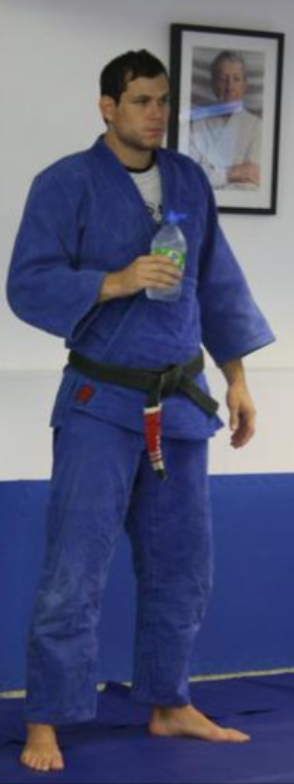
Check out Roger Gracie's Closed Guard system on BJJ Fanatics here: https://bjjfanatics.com/collections/instructional-videos/products/the-roger-gracie-closed-guard-system-by-roger-gracie?variant=32106588602466
Article written by Jimmy Rose, BJJ Purple Belt & lifelong martial artist


